I have always loved reading and, in fact, I almost enrolled to study Spanish Literature. But as fate would have it, things didn't work out that way. Although I have turned my life towards science, I am always a little happier when I have time to read. That's why I wanted to take this opportunity to share some of my favourite books with you.
Books
Books
Books
Books
Books
Books

DID YOU KNOW THAT ... ?

For the top 10 bestselling female authors (who include Jane Austen and Margaret Atwood, as well as Danielle Steel and Jojo Moyes), only 19% of their readers are men and 81%, women. But for the top 10 bestselling male authors (who include Charles Dickens and JRR Tolkien, as well as Lee Child and Stephen King), the split is much more even: 55% men and 45% women.

In other words, women are prepared to read books by men, but many fewer men are prepared to read books by women.

Why does this matter? For a start, it narrows men’s experiences of the world.

If men don’t read books by and about women, they will fail to understand our psyches and our lived experience. They will continue to see the world through an almost entirely male lens, with the male experience as the default. And this narrow focus will affect our relationships with them, as colleagues, as friends and as partners. But it also impoverishes female writers, whose work is seen as niche rather than mainstream if it is consumed mainly by other women.

Adapted from:
Why do so few men read books by women?, by MA Sieghart

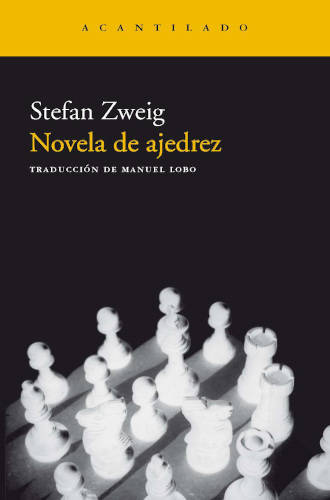
The Royal Game, by Stefan Zweig

General

- Author: Stefan Zweig

- Pages: 96

- Year of publication: 1942

- Synopsis: The Royal Game crackles with suspense; it is the story of a man who outwits the Gestapo and finds the courage to go on living. Whilst in prison, he finds sanctuary in "imaginary" chess, but later on engages in a confrontation with the chess prodigy of the day.

Why this book?

This book was apparently a light summer read, but it has become a torturous story that constantly comes back to me. Probably hidden within the pages of this story is one of the best descriptions of madness, psychological torture and evil, as well as the evasion mechanisms the mind uses to survive.

All of this revolves around chess, which becomes both victim and executioner in a work in which Zweig takes the opportunity to criticise Nazism, the cause of his fear and exile and, ultimately, also of his suicide, which he committed shortly after finishing writing this story.

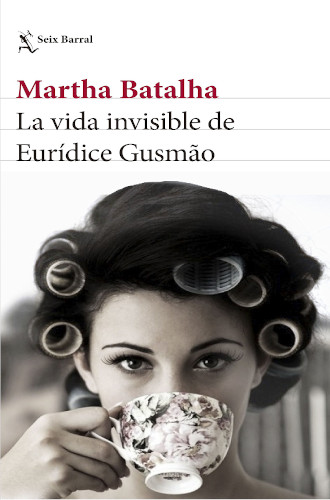
The Invisible Life of Eurídice Gusmão, by Martha Batalha

General

- Author: Martha Batalha

- Pages: 272

- Year of publication: 2016

- Synopsis: Euridice is young, beautiful and ambitious, but when her rebellious sister Guida elopes, she sets her own aspirations aside and vows to settle down as a model wife and daughter. And yet as her husband's professional success grows, so does Euridice's feeling of restlessness. She embarks on a series of secret projects - from creating recipe books to becoming the most sought-after seamstress in town - but each is doomed to failure. Her tradition-loving husband is not interested in an independent wife. And then one day Guida appears at the door with her young son and a terrible story of hardship and abandonment.

Why this book?

This is another book about women. Women in misfortune who could be any woman, in any place and at any time, but who in this particular case are two sisters in Brazil in the 1950s. A novel that, without magical realism, brought me back to Como agua para chocolate and Doña Bárbara. A novel in which there is pain and mistreatment, but also hope in the midst of chaos, between the cookers of a succulent and welcoming kitchen.

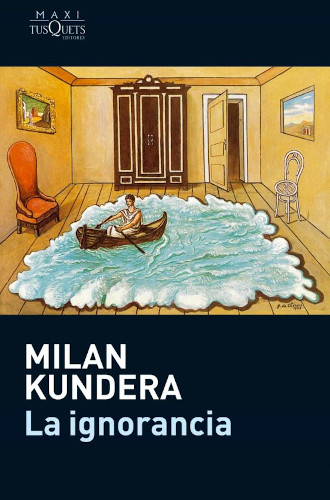
Ignorance, by Milan Kundera

General

- Author: Milan Kundera

- Pages: 208

- Year of publication: 2000

- Synopsis: A man and a woman meet by chance while returning to their homeland, which they had abandoned twenty years earlier when they had chosen to become exiles. Will they manage to pick up the thread of their strange love story, interrupted almost as soon as it began and then lost in the tides of history? The truth is that after such a long absence "their memories no longer match." We always believe that our memories coincide with those of the person we loved, that we experienced the same thing. But this is just an illusion. Then again, what can we expect of our weak memory? It records only "an insignificant, minuscule particle" of the past, "and no one knows why it's this bit and not any other bit." We live our lives sunk in a vast forgetting, a fact we refuse to recognize.

Why this book?

I became obsessed with Kundera in 2021. Going back to one of his novels became like returning to a safe place, a place where the words embrace you and everything is peaceful like a Sunday evening. Yet I could be talking about Ignorance or Identity, or The Unbearable Lightness of Being... It is interchangeable, inherent in all of Kundera's work to flow through anodyne human relationships and sprinkle them with basic longings and pathos in equal measure, and to write probably the best dreamscapes ever published.

But in Ignorance he focuses on memories, on the burden of living and how we are but a passing thing in the eyes of others while the journey is dense, complex and suffocating for us. It is the perfect counterpoint to the lightness that he sets out in The Unbearable...

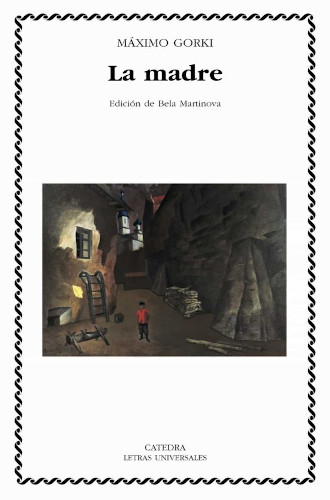
Mother, by Maxim Gorki

General

- Author: Maxim Gorki

- Pages: 440

- Year of publication: 1906

- Synopsis: Gorky traveled throughout his native land and at one point became friends with Lenin. His travels overwhelmed him with the vastness and beauty of his country and they also made him sharply aware of the ignorance and poverty of its people. This novel tells the story of the common proletariat who protested against the czar and the capitalists which eventually led to the October Revolution. Pelageya is the wife of a factory worker who ignores the political upheaval in her country in favor of caring for her personal life. She represents hundreds of workers who are concerned with living their lives. Her son Pavel takes a different path and joins the revolution inspiring many Russians who were living under a capitalistic society in Russia. Gorky saw the "mother country" as supporting her children as they fought for their rights.

Why this book?

There is a thing about Russian writers that had always scared me. The cold, the heavy clothing, the dramatic loves and enormous and complex families... All wrapped to conform long stories where the fates of the main characters are decided next to the samovar.

But then the pandemic arrived and I came across this book during the lockdown. I kind of merged with its pages and suffered with the Mother and the Tsarist Russian society.

Although Gorki belongs to what some people call Soviet or Socialist realism, and though his narrative draws some distance between the reader and the scenes, it has little to do with later soviet books, such as A. Kollontai's, because The Mother is as painful as delightful, and far enough from propaganda to be considered as one of the greatest Russian novels.

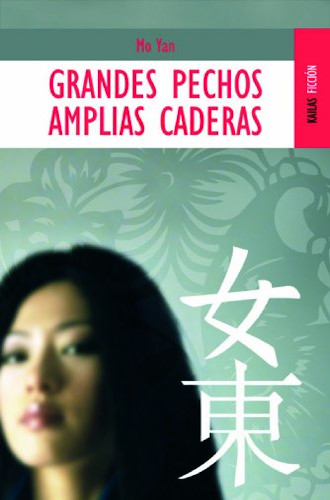
Big Breasts and Wide Hips, by Mo Yan

General

- Author: Mo Yan

- Pages: 840

- Year of publication: 1996

- Synopsis: The protagonist, Mother, is born in 1900 and married at seventeen into the Shangguan family. She has nine children, only one of whom is a boy—the narrator of the book. A spoiled and ineffectual child, he stands in stark contrast to his eight strong and forceful female siblings. Mother, a survivor, is the quintessential strong woman who risks her life to save several of her children and grandchildren. The writing is picturesque, bawdy, shocking, and imaginative. The structure draws on the essentials of classical Chinese formalism and injects them with extraordinarily raw and surprising prose. Each of the seven chapters represents a different time period, from the end of the Qing dynasty up through the Japanese invasion in the 1930s, the civil war, the Cultural Revolution, and the post-Mao years.

Why this book?

I don't usually like huge family plots, spanning generations, countries and misfortunes. But this novel stood out as an exception for nearly 900 pages. I remember poverty, pain and helplessness, hostile landscapes, social change, scorn and humiliation. A story about women where women are the majority of the characters and none of them the main characters, only collateral damage of a savage, masculine and brutish society. An incredible, complex prose, full of nooks and crannies, of transitions, of temporal juggling... that unravels the intimacies of Chinese society over the course of a century

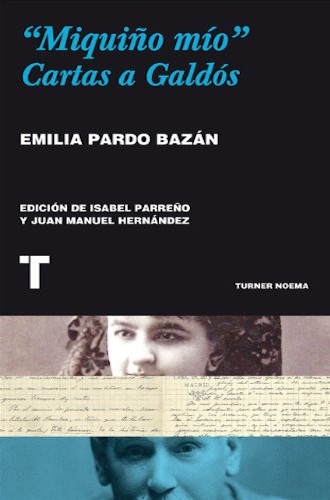
Miquiño mío: Cartas a Galdós, by Emilia Pardo Bazán

General

- Author: Emilia Pardo Bazán

- Pages: 224

- Year of publication: 2013

- Synopsis: Emilia Pardo Bazán's correspondence with Galdós covers the best creative years of their lives, between 1883 and 1915. This is a compilation of the letters sent by Pardo Bazán to Galdós, known to date, arranged in chronological order and accompanied by an approach to the figure of the writer from A Coruña and the essential account of the love and friendship between the two authors.

Why this book?

I find the letters between famous writers fascinating. How is it possible for two people of such talent to have been able to coincide in time and, moreover, to have maintained an epistolary relationship of which there is a record and in which they lay themselves bare, leaving aside the figure of the writer to be just "the person". I remember reading letters between Lorca and Miguel Hernández and it was marvellous to see the arrogance of one, the humility that was gradually disappearing in the other, the impetus, the admiration...

In this case the sensation is the same but magnified.The letters between Bazán and Galdós are only preserved one way (those written by Galdós are not preserved or are privately owned) but that is enough to see the birth of a friendship from the purest admiration, how that friendship becomes something more despite all the impediments (physical, family...) and, also, how it degrades until it becomes little more than a memory. My little one...


CLARA SUÁREZ QUINTANA

2022 © All rights reserved